The question
How does audible sound at 70 Hz, 300 Hz and 2000 Hz affect how long Raphanus sativus (radish) seeds take to germinate?
Earlier studies found that sound sped up germination in mung beans at around 2000 Hz, in Arabidopsis at 70 Hz and above, and in maize at 300 Hz. Each study used a different plant, so I picked one frequency from each and tested all three on the same species.
Setup
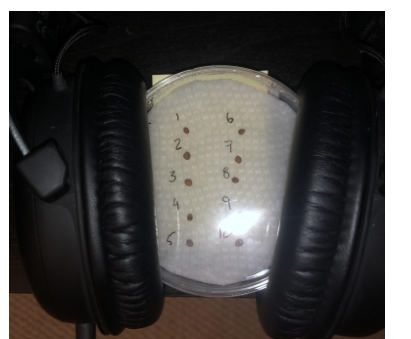
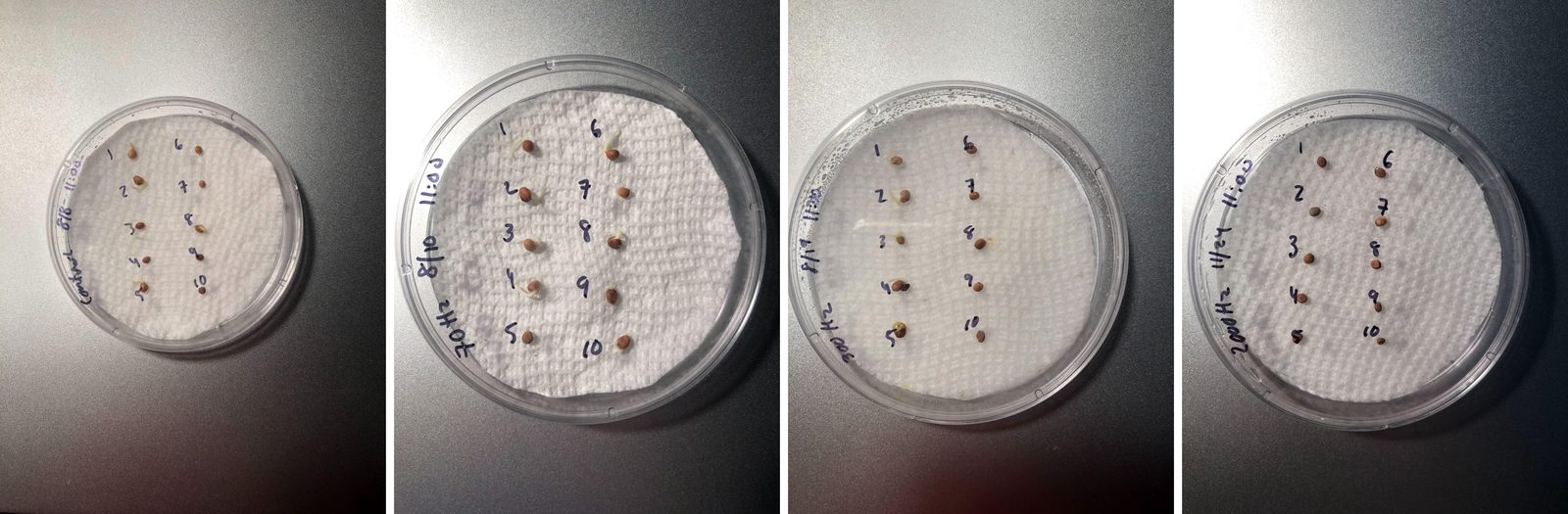
Each condition used ten radish seeds of similar size and color on damp paper towel in a petri dish. The dish sat between the ear cups of a headset, covered to keep it dark.
I generated sine tones in Audacity and played them in a cycle of 6 hours of sound and 6 hours of silence, with a silent control. Volume, light and temperature were kept the same. Every 6 hours I counted the seeds whose radicle (first root) had emerged.
Results
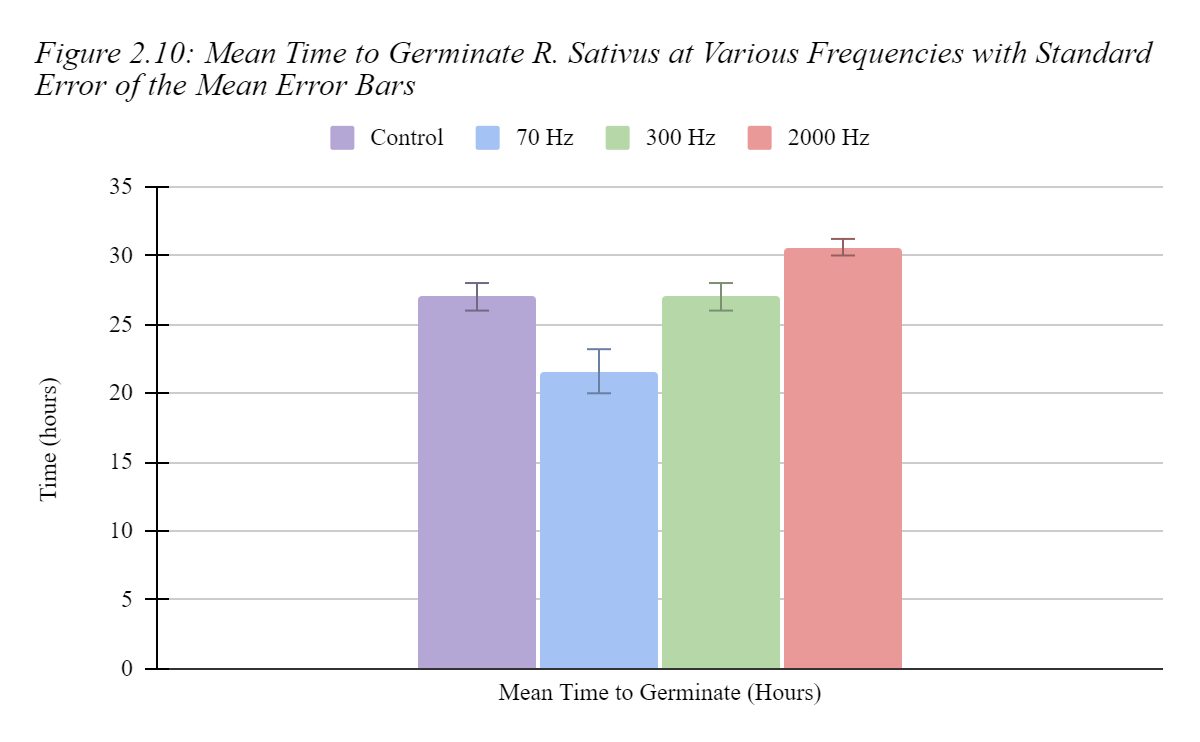
Mean germination time was 27 hours for the control, 21.6 hours at 70 Hz, 27 hours at 300 Hz and 30.6 hours at 2000 Hz.
T-tests against the control showed that 70 Hz made seeds germinate about 20% faster (p = 0.010), and 2000 Hz made them about 13% slower (p = 0.006). 300 Hz had no effect (p = 1.000). Overall, higher frequencies went with longer germination times.
What might explain it
Sound might change how quickly cells divide during mitosis. It could also damage the seed coat, as one study saw in maize at 300 Hz, or change the levels of growth hormones and inhibitors that radishes produce.
The 300 Hz result also differed from the maize study, which suggests the size and structure of a seed may decide which frequencies affect it.
Limitations and next steps
Ten seeds per condition is a small sample, and outside vibrations could have reached the dishes. A larger study with better equipment could measure cell size and division rate, check for seed coat damage, and test for growth inhibitors at each frequency.